How Equinor Took 3LC From Pilot to Production in Under a Year
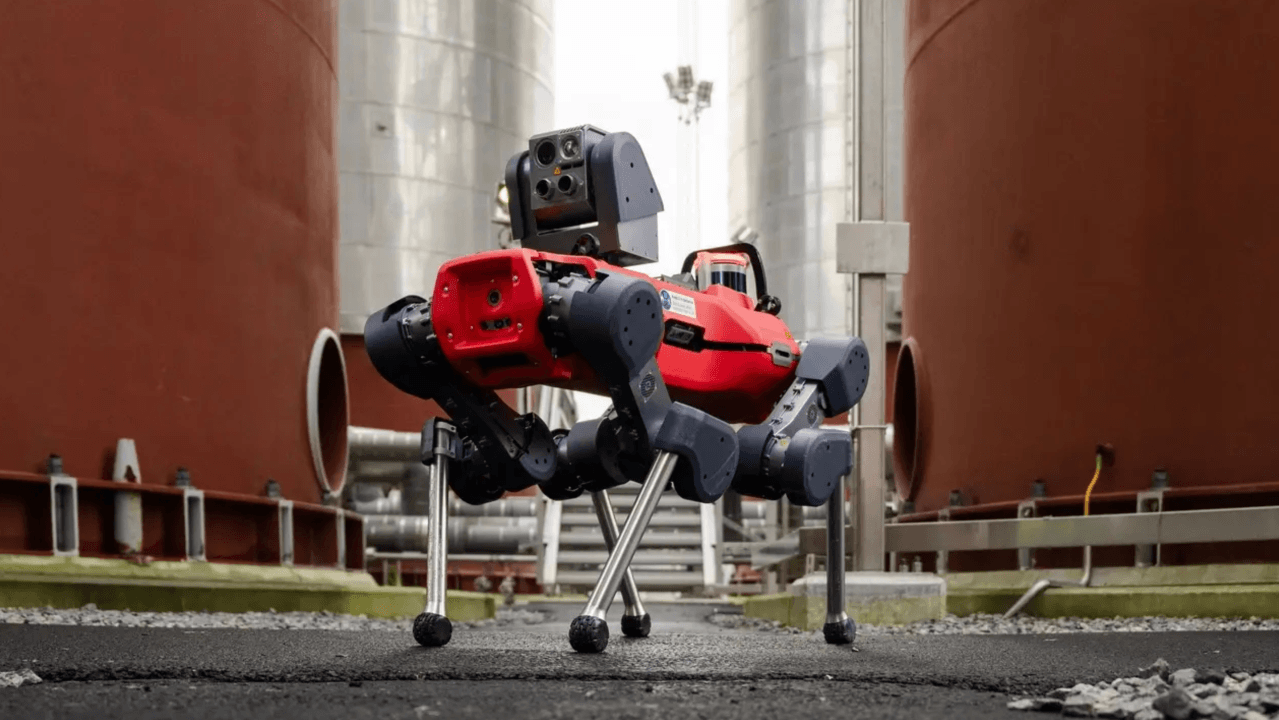
A robot named Roberta patrols a carbon capture and storage facility. Robots called Spot inspect onshore terminals. Satellites watch for oil slicks on the sea. A microscope classifies microfossils in a quiet lab. Four very different jobs, four independent teams inside Equinor — and one tool underneath all of them.
Following a successful pilot and testing, 3LC is strengthening Equinor’s computer vision toolbox and is becoming a popular choice among their data scientists. It is enabling the teams to build explainable AI models and identify often hidden inefficiencies in training data.
Most enterprise AI pilots don’t make it out of the pilot phase. The technology works, the team is enthusiastic, and then the project quietly expires when next quarter’s priorities arrive. Stalled pilots have become almost a defining feature of enterprise AI.
Equinor’s engagement with 3LC is one of the exceptions, and the speed of it is part of what makes it interesting. Equinor saw the fit between 3LC’s data-quality technology and the computer-vision problems they were trying to solve, ran a focused pilot, and — less than a year later — the tool is in production across four independent teams and the project has reached cash-flow break-even, and the 3LC deployment within Equinor is increasing, with further commercial discussions agreed for later in 2026.
This is the story of what happens when a major industrial operator recognises a technology fit early and moves on it.
The technology problem
The match came from Equinor’s Machine Learning Autonomy team, which was looking for ways to improve the monitoring of subsea installations. Their work depends on computer vision — making it possible for machines to see and interpret images and video — but they kept hitting a familiar wall.
3LC’s tool gives ML teams a way to identify and resolve data-quality issues directly inside their training pipeline — surfacing the few examples that matter most among the thousands that don’t.
From identification to measurable results
Equinor identified 3LC through its Startup Hub, a unit inside the company that systematically scans the global startup market for technologies that could solve specific operational problems.
A structured pilot followed, focused on the subsea monitoring problem that had brought the two sides together.
What the pilot produced
Today, 3LC is in production across four very different parts of Equinor’s operation.
Northern Lights. On a windswept stretch of Norway’s western coast, a four-legged Anymal robot named Roberta patrols the perimeter of the Northern Lights carbon storage facility. Her job is to detect damage to the fence around the site — a small task in isolation, but one that matters when the facility behind it is part of the world’s first commercial CO2 storage operation. The vision model that allows Roberta to distinguish a damaged fence from a normal one was developed using 3LC.
Sture and Mongstad. A few hundred kilometres away, four-legged Spot robots make their rounds of the onshore terminals at Sture and Mongstad. They carry cameras, thermal sensors and microphones, generating rich datasets for monitoring the condition of equipment that is often only sparsely instrumented in any other way.
Satellites watching the sea. Higher up, Equinor’s Remote Sensing organisation uses 3LC on satellite imagery to detect oil slicks on the sea surface — a capability with obvious safety and environmental implications, and one where misclassification carries a real cost.
Microscopes and microfossils. And in the subsurface organisation, the same tool is being piloted to build a model for classifying microfossil images — small, intricate ancient life forms whose correct identification helps geologists understand what lies beneath the earth’s surface.
Cash-flow positive, and still scaling
The project has reached cash-flow break-even, and Equinor is now looking to extend the use of 3LC into broader strategies for AI training and predictive maintenance.
What the engagement has meant for 3LC
In every enterprise conversation 3LC has entered since, Equinor has been a valuable reference for the company. It has helped open doors — and close deals — with several global Fortune 500 companies in industrial and technology sectors.
The commercial momentum is showing up in how 3LC is building. Since the Equinor engagement began, 3LC has added five people to the sales team. The US expansion is underway: 3LC has established a long-term base in Boulder, Colorado, with two recent hires out of the University of Colorado Boulder’s data science environment. Both with technical capabilities that map directly onto the problems 3LC’s enterprise customers are solving. The Boulder office is being built out as a core competency centre for Physical AI and multimodality — the category frame 3LC believes best describes where enterprise AI is heading.
“Equinor recognised the fit early and moved quickly and turned a focused pilot into production across multiple sites. The engagement didn’t just prove the technology — it’s opened doors with Fortune 500 customers we couldn’t have reached this fast otherwise, and it’s directly shaped where we’re taking 3LC next: deeper into Physical AI and multimodality, with a growing US presence built around it.”
— Paul Endresen, CEO, 3LC
What’s next
For the teams inside Equinor, 3LC is now part of the everyday infrastructure of how AI-driven monitoring is built. For 3LC, the Equinor engagement has become the proof point that unlocked an enterprise pipeline that was, a year earlier, mostly aspiration.
The pattern underneath the story is simple enough: when a major industrial operator recognises the fit between its problems and a new technology, and acts on it, the timelines that usually govern enterprise AI collapse. That pattern is not unique to Equinor and does not require any special internal programme to reproduce — only the willingness to recognise the fit early, and to move.
If you’re working on a computer-vision or monitoring problem in a safety-critical industrial setting, talk to 3LC →


